The Silent Shockwave: Why Trade Risk Is Rising Across South Africa





This article has been supplied.
By: Thabiso Tsoledi - General Manager: Risk and Business Development, CGIC
South Africa entered 2026 with cautious optimism. Inflation had moderated, interest rates appeared to be stabilising, and there were signs that economic activity was beginning to improve.
Yet, beneath the surface, a different picture is emerging.
At CGIC, we are seeing increasing evidence that the trading environment has become more challenging. Risk is no longer confined to isolated businesses or sectors. Pressure is becoming more widespread, with stress signals emerging across multiple parts of the economy, particularly in consumer-linked sectors, agriculture and food value chains.
Importantly, South Africa is also experiencing an increase in business insolvencies. Insolvencies are often a lagging indicator of economic stress, but they serve as a reminder that prolonged pressure on margins, cash flow and working capital is beginning to translate into business failures.
One of the key contributors to this environment is not necessarily the direct impact of the conflict in the Middle East, but rather the second-round effects that follow.
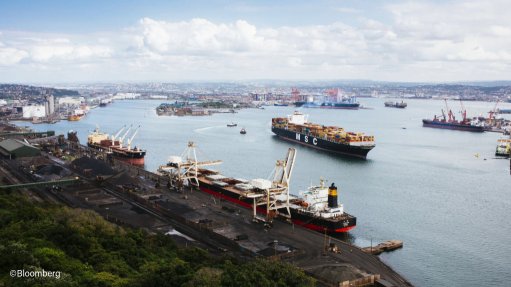
The first-round effects are obvious: higher oil prices, shipping disruptions, longer transit times and increased freight costs. The second-round effects are more subtle but often more damaging. Rising fuel costs increase transport costs, which increase the cost of goods. Higher prices place pressure on consumers, demand slows, cash conversion cycles lengthen and businesses begin to experience growing pressure on their debtor books.
This is precisely the environment in which trade credit risk starts to rise.
Within our own discussions, concerns around consumer affordability, rising costs of living, fuel price volatility and geopolitical uncertainty continue to feature prominently in assessments of the trading outlook.
Several sectors warrant particular attention:
Consumer-facing retail businesses, where household budgets remain under pressure.
FMCG businesses facing higher distribution costs and more constrained consumer spending.
Food and agricultural value chains dealing with input cost pressures and operational volatility.
Manufacturing businesses facing rising energy, transport and imported input costs.
Logistics and transport operators directly exposed to fuel inflation and supply chain disruptions.
Building and construction-related businesses, where subdued activity, delayed payments and liquidity constraints continue to place pressure on contractors and suppliers.
Businesses with extended supply chains and significant reliance on imported goods.
The metals and steel industry also remains an important sector to watch. Recent tariff and protective measures introduced by the South African government are intended to support local production and improve competitiveness. Whether these interventions lead to a meaningful recovery in the sector remains to be seen. While the measures may reduce some import pressure, long-term success will still depend on demand growth, infrastructure investment, energy reliability and broader economic conditions.
Not all sectors face the same outlook. Certain mining and commodity-related businesses continue to benefit from favourable global demand dynamics and commodity prices, although operational and cost pressures remain areas requiring close monitoring.
From a trade credit insurance perspective, the overall direction of risk is becoming clearer.
The challenge facing South African businesses today is not a lack of opportunity. It is the growing complexity of the operating environment. Businesses are navigating geopolitical uncertainty, volatile energy markets, rising insolvencies, changing trade routes, elevated logistics costs and weaker consumer demand simultaneously.
The lesson for risk professionals is straightforward: businesses rarely fail because of a single event. Distress normally arises when multiple pressures combine and gradually weaken financial resilience.
As a trade credit insurer monitoring billions of rand of exposure across the economy, our view is that this is a period requiring heightened vigilance rather than panic.
Businesses with strong balance sheets, disciplined credit management and healthy liquidity should remain resilient. However, those operating with thin margins, stretched working capital and limited financial flexibility may find the next twelve months considerably more challenging than the last.
The war may be taking place thousands of kilometres from South Africa, but its economic aftershocks are increasingly being felt in boardrooms, factories, construction sites, warehouses and debtor books across the country.
The real risk is not the conflict itself.
It is the silent second-round effects that follow.
Article Enquiry
Email Article
Save Article
Feedback
To advertise email advertising@creamermedia.co.za or click here

Projects

Latest Multimedia

Latest News


Showroom

EIMS is an independent specialised environmental consulting firm offering the full spectrum of environmental management services across all sectors...
VISIT SHOWROOM
Stewarts & Lloyds is a leading steel, tube, and engineering product supplier in South Africa.
VISIT SHOWROOM



Announcements
What's On
Subscribe to improve your user experience...
Option 1 (equivalent of R125 a month):
Receive a weekly copy of Creamer Media's Engineering News & Mining Weekly magazine
(print copy for those in South Africa and e-magazine for those outside of South Africa)
Receive daily email newsletters
Access to full search results
Access archive of magazine back copies
Access to Projects in Progress
Access to ONE Research Report of your choice in PDF format
Option 2 (equivalent of R375 a month):
All benefits from Option 1
PLUS
Access to Creamer Media's Research Channel Africa for ALL Research Reports, in PDF format, on various industrial and mining sectors
including Electricity; Water; Energy Transition; Hydrogen; Roads, Rail and Ports; Coal; Gold; Platinum; Battery Metals; etc.
Already a subscriber?
Forgotten your password?
Receive weekly copy of Creamer Media's Engineering News & Mining Weekly magazine (print copy for those in South Africa and e-magazine for those outside of South Africa)
➕
Recieve daily email newsletters
➕
Access to full search results
➕
Access archive of magazine back copies
➕
Access to Projects in Progress
➕
Access to ONE Research Report of your choice in PDF format
RESEARCH CHANNEL AFRICA
R4500 (equivalent of R375 a month)
SUBSCRIBEAll benefits from Option 1
➕
Access to Creamer Media's Research Channel Africa for ALL Research Reports on various industrial and mining sectors, in PDF format, including on:
Electricity
➕
Water
➕
Energy Transition
➕
Hydrogen
➕
Roads, Rail and Ports
➕
Coal
➕
Gold
➕
Platinum
➕
Battery Metals
➕
etc.
Receive all benefits from Option 1 or Option 2 delivered to numerous people at your company
➕
Multiple User names and Passwords for simultaneous log-ins
➕
Intranet integration access to all in your organisation